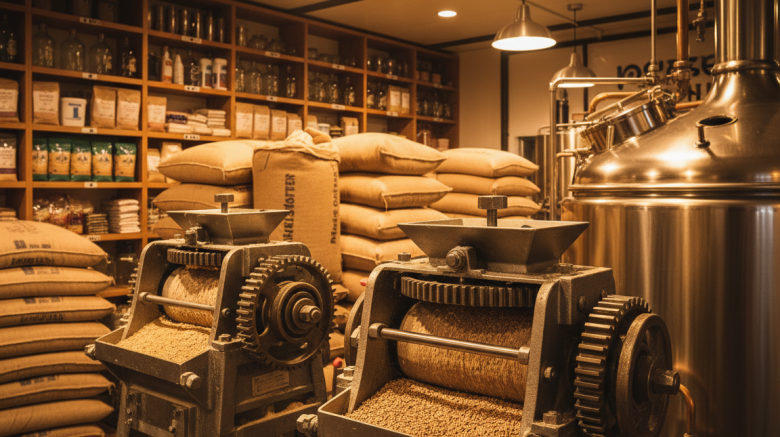
The right Beer Brewery Equipment is vital for production capacity, beer quality, and day-to-day efficiency. Whether you’re upgrading from a basement setup to a pilot brewery or expanding your taproom, your equipment choices should align with your goals. Be sure to consider your preferred beer styles, the space you have available, and your budget.
Visit website of Home Beer Brewing Equipment For Sale
Startups and expanding operations should concentrate on core systems before anything else. Put your budget into reliable mash and lauter systems, a capable boil kettle with whirlpool functionality, and properly sized fermenters and brite tanks. Bring in advanced automation later as the brewery develops. A staged approach like this helps you avoid expensive mistakes and keeps your capital focused on actual requirements.
The U.S. craft beer market now includes thousands of microbreweries, which means commercial ventures need durable gear and a strong business plan. Buying from reputable suppliers for beer equipment for sale and stocking essential homebrew supplies for test batches ensures consistency as you scale.
Good planning involves more than just tanks and kettles. Pumps, sanitary plumbing, cleaning systems, and quality filtration are essential for consistent brewing. If you are moving from hobby brewing into small-scale commercial work, compare microbrewery gear with home beer brewing equipment for sale. Choose equipment that aligns with your timeline and growth targets.
Understanding Brewery Objectives And Site Requirements
The first step is to set clear production goals and identify the beer styles you want to brew. For a neighborhood brewpub, a five-barrel brewhouse is often ideal, whereas twenty-barrel systems better support regional distribution. Ensure fermenter capacity matches brewhouse output to avoid bottlenecks, which are critical for lagers needing extra conditioning time.
Determine your automation level early in the planning process. Basic controls, VFDs, and temperature controllers can greatly reduce labor costs in brewpub settings. More automation usually benefits larger sites by improving consistency and efficiency.
Assessing production volume and scalability
Map out annual and peak demand to size the brewhouse and fermenters realistically. Consider spare capacity for seasonal runs and pilot batches. If growth is expected, opt for modular microbrewery gear or industrial brewing machinery that can be expanded in phases.
Match fermenter count to batch scheduling. Use unitanks or additional bright beer tanks to smooth throughput. Plan for varied beer styles by allocating reserve tanks for long-conditioning beers.
Space constraints, utilities, and layout planning
Design the layout for grain handling, milling, the brewhouse, cellar, cold storage, and packaging with workflow as a priority. High ceilings allow for stacked tanks. Tight spaces may require combination vessels or multi-function tanks that blend mash tuns and lauter tuns.
Utility sizing should happen during design, including water supply, wastewater routing, steam or electric heat, compressed air, CO2 capture, and glycol cooling. Proper plumbing and routing prevent future rework; source valves, hoses, and fittings from reputable distributors to meet code and durability needs.
Budgeting and phased equipment investment
Your budget should be broken into major categories like brewhouse, fermentation and cellar, packaging, utilities, and logistics. Essentials such as brewing kettles, pumps, and core tanks should come first.
A phased investment strategy can help protect cash flow. Start by purchasing core beer brewery equipment and basic microbrewery gear. As revenue grows, you can add commercial brewing equipment and industrial brewing machinery like automated packaging lines or additional BBTs.
| Planning Area | Key Considerations | Typical Equipment |
|---|---|---|
| Brewhouse Size Planning | Match batch size to market; leave room for growth | Brewing kettles, mash/lauter systems, malt mill |
| Fermentation And Cellaring | Turnover rate, beer styles, conditioning capacity | Fermenters, unitanks, bright beer tanks |
| Utilities & site layout | Water, waste, steam or electric heat, glycol, and CO2 routing | Pumps, heat exchangers, glycol chillers, valves |
| Packaging & logistics | Storage, throughput, distribution channels | Kegging lines, canning machines, storage racking |
| Budget strategy | Prioritize essential equipment and phase noncritical purchases | Core beer brewery equipment first, then commercial brewing equipment |
Beer Brewery Equipment: Core Milling And Brewhouse Systems
Selecting the right brewhouse components is essential for beer quality and production efficiency. This section examines how milling, mashing, lautering, and boiling systems work together. It is important to choose equipment that matches your batch size, recipe range, and future growth plans.
Malt Mills And Milling Choices
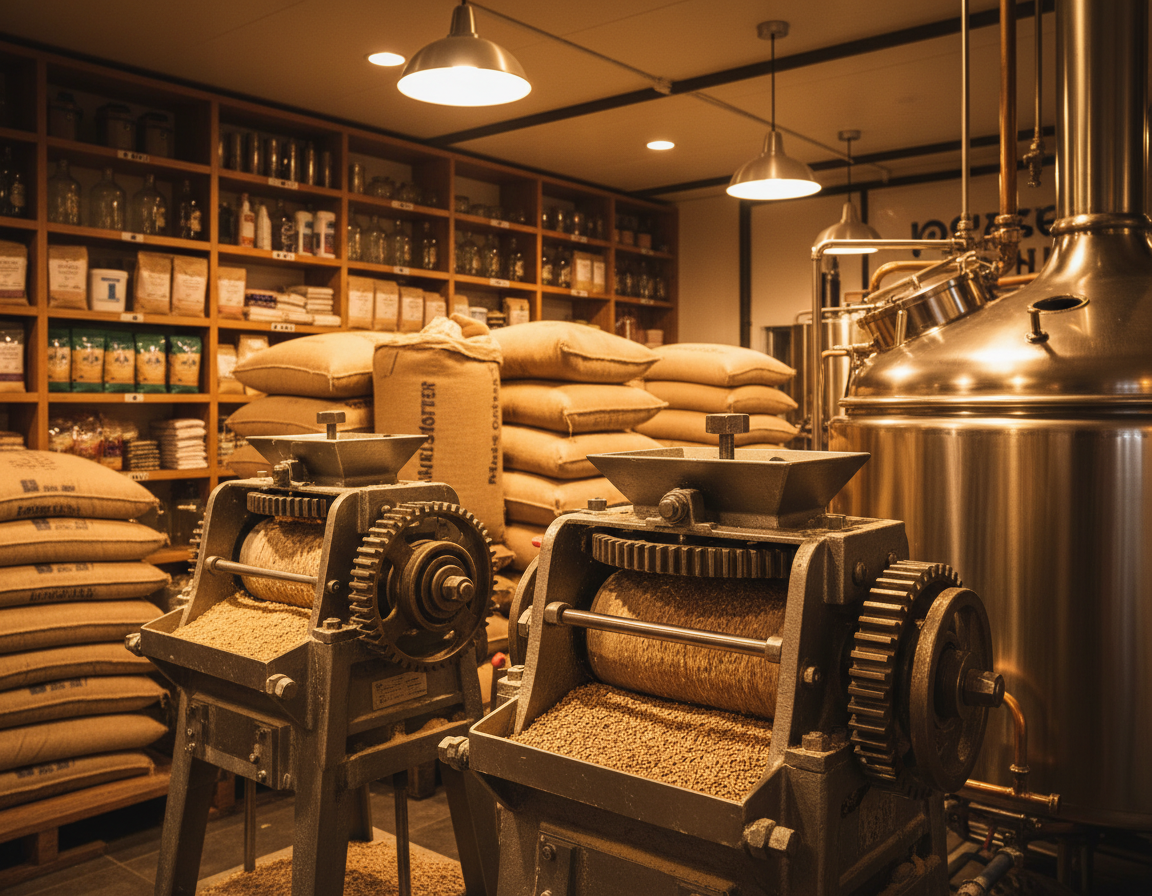
Milling significantly impacts mash efficiency and lautering. Small breweries might opt for pre-milled grain for ease. Yet, on-site milling offers better control over grain processing. With a commercial malt miller, you can buy grain in bulk and adjust crush settings for each recipe.
Dry mills, including two-roll and four-roll designs, are prevalent. Look for features like stainless steel construction, adjustable rollers, and automated feeding for consistent throughput. Conditioned milling or light wetting minimizes dust and preserves husk integrity without the complexity of full wet mills.
Mash Tuns, Lauter Tuns, And Combination Systems
Combined mash/lauter vessels are ideal for space-saving and cost reduction, suitable for brewpubs and small production sites. Separate mash and lauter tuns improve throughput and make parallel brewing easier during busy periods.
Vessel size should be chosen according to brewing frequency and batch volume. Maintain mash temperatures between 148°F and 158°F for optimal conversion, requiring about 60 minutes for saccharification. Lauter tuns should ensure even runoff and effective grain bed management to prevent stuck mashes.
Boil Kettles And Whirlpool Vessels
Boil kettles are available in steam-heated, electric, and direct-fire models. Steam systems are often best for larger operations that need precise temperature control. Pilot systems often suit electric kettles, whereas direct-fire kettles may provide a lower-cost option.
Size kettles with at least 40% extra volume to mitigate boil-over risks. A dedicated whirlpool tank improves wort clarity, reduces kettle occupancy, and allows for increased daily batches. Make sure vessel size and vessel count match your recipe complexity and projected growth.
Fermentation And Cellar Equipment
Every craft brewery depends on fermenting tanks. Yeast removal, clarification, and cleaning become easier with cylindroconical fermenters. They should include integrated glycol jackets for precise temperature control along with ports for sampling and dry-hopping.
Choosing the right tank size is critical. It needs to align with your brewing volume and schedule. If you brew lagers or age beer in barrels, extra capacity is necessary to avoid bottlenecks. A combination of small and large tanks is ideal for switching between small-batch saisons and high-volume IPAs.
Beer is prepared for packaging in brite tanks. Pressure-rated brite tanks make accurate carbonation and conditioning possible before bottling, canning, or kegging. That setup frees fermenters for new batches and helps packaging move faster.
In one vessel, unitanks handle both fermentation and conditioning. Because they reduce transfers and oxygen exposure, they help improve flavor stability. When cellar space is limited, unitanks can reduce the need for multiple vessels, even though the upfront cost is higher.
Horizontal lagering tanks are perfect for conditioning bottom-fermented beers. They offer gentler conditioning due to lower hydrostatic pressure and stable temperature distribution. This improves yeast health and clarity during long lagering periods.
Serving tanks are common in brewpubs that dispense directly from cold rooms. By eliminating the need for kegs, single-walled serving tanks simplify draft service and help keep beer fresh and cold.
Yeast management systems also matter. House strains can be preserved more effectively with dedicated yeast brinks and propagation tanks, reducing reliance on suppliers. Good yeast handling is essential for consistency across batches.
As you plan your cellar layout, be sure to include room for beer filtration systems. Filtration choices impact clarity, shelf life, and flavor. Ensure your piping, pump access, and ports facilitate smooth transfers between fermenting tanks, brite tanks, unitanks, and filtration stages.
Supporting Equipment: Pumps, Plumbing, Filtration, And Cooling
Reliable support gear is essential for a brewery’s daily operations. Pumps are responsible for moving wort, beer, and cleaning solutions with precision. Tank connections, flow control, and contamination prevention all depend on the right plumbing parts. Filtration and cooling systems are critical for preserving clarity and maintaining stable temperatures in every batch.
Flow Control And Brewery Pumps
When choosing pumps, consider flow rate, vertical suction lift, maximum head, and power requirements. High-flow transfers are well suited to centrifugal pumps. By comparison, diaphragm and peristaltic pumps are better suited to protecting sensitive yeast and handling CIP fluids. Integrating Variable Frequency Drives can help reduce energy consumption and extend motor lifespan.
Plumbing, Hoses, Valves, And Fittings
Small components can still make a major difference. Use stainless steel valves, sanitary tri-clamp fittings, and reinforced gas hoses for CO2. You also need food-grade tubing. For dependable sourcing, work with a plumbing wholesale distributor such as Installation Parts Supply. They can supply brewery-grade parts and traceable materials that comply with health codes.
Filtration Systems And Quality Control
To maintain clarity and shelf life, filtration is important for removing yeast and particulates. Breweries can choose from plate-and-frame, DE, membrane cartridge, and crossflow filtration systems. Filter selection should be based on the beer style and the brewery’s distribution plans. Incorporate hydrometers, refractometers, and dissolved oxygen meters into the workflow to monitor fermentation and packaging quality.
Glycol Chillers And Cooling Systems
Temperature management is vital to prevent spoilage and shape flavor. A small setup may use a python chiller. Larger breweries, on the other hand, rely on glycol chillers tied into jacketed fermenters for precise temperature control. Make sure the chiller is sized for the facility load, and design redundancy into cooling systems to prevent costly fermentation temperature swings.
Packaging, Distribution Equipment, And Kegging Systems
Here we cover the equipment needed to take beer from the cellar to the market. It is important to choose systems that match your production goals and distribution strategy. Compact solutions work for small taprooms, while regional distribution demands robust, high-throughput equipment.
Kegging is still essential for taproom service and draft sales. Manual keg fillers are cost-effective for tight budgets. Semi-automated and automated systems reduce labor and speed up filling for growing breweries. A good keg cleaning and washing system is essential for protecting beer flavor and preventing rework.
Kegging Fill Methods And Options
Couplers and dispensing heads should meet North American draft standards. For cans or bottles, counter-pressure fills are worth considering. Draft lines, regulators, and gas panels are necessary for on-site sales and distribution.
Bottling And Canning Choices
For low-volume runs and house brands, tabletop and direct-draw canning systems are suitable. For wider distribution, counterpressure canners help lower oxygen pickup and improve shelf life. Mobile canning crews provide flexibility without a major capital expense, though they require careful scheduling and cold storage.
Bottling is often the preferred format for specialty and premium beers. For limited runs, manual bottling is suitable. Higher volumes require automated bottling lines with pressure fillers, rinsers, and labelers. Choose the filler type based on bottle design to minimize oxygen and maintain carbonation.
Support Equipment And Storage For Packaging
Workflow can be improved with packaging equipment such as conveyors, labelers, and pack-off stations. Shelving and racking help organize labels, crowns, bottles, and cans. Cold storage should be planned to match seasonal spikes and distribution rhythms.
| Function | Small Breweries | Growing Breweries |
|---|---|---|
| Kegging | manual fillers and compact keg washers | semi-auto lines, automated keg washers |
| Can Packaging | tabletop or direct-draw systems | counterpressure canners and mobile canning coordination |
| Bottle Packaging | manual bottling and hand labelers | pressure fillers, automated rinsers, labelers |
| Packaging Support | basic shelving and conveyors | integrated packaging equipment and cold storage |
When purchasing, compare vendors for beer equipment across kegging, filling, and packaging lines. Think about service plans, spare parts availability, and training. Partner with specialized craft-beverage carriers for large moves or mobile canning dates to protect equipment and schedules.
System sizing should reflect future growth. When packaging and distribution equipment are properly matched, breweries can maintain shelf life and reduce expensive downtime. With this approach, breweries can scale more reliably while protecting brand reputation and product quality.
Conclusion
When building a brewery, equipment must be aligned with production goals, site constraints, and beer styles. A strong brewhouse, reliable fermenters, and basic packaging equipment are essential. They help ensure beer quality all the way from mash to can or keg. Making informed decisions early on can prevent costly upgrades later.
Commercial brewing equipment must include malt mills, mash and lauter systems, and kettles. You also need brite tanks and either cylindroconical fermenters or unitanks. Support systems such as pumps, sanitation gear, glycol cooling, and beer filtration systems are essential for safe and consistent operations. Even when starting with homebrew supplies, brewery-grade components are the better choice for durability and control.
A staged purchasing plan is best. Begin with a functional cellar and brewhouse, then expand into brite tanks and automated packaging as revenue rises. Mobile canning is worth considering if funds are limited. Source plumbing and fittings from trusted distributors. Include basic quality-control tools like refractometers, hydrometers, and DO meters. This strategy supports a smooth transition from a garage setup to a sustainable microbrewery with the right equipment at every stage.